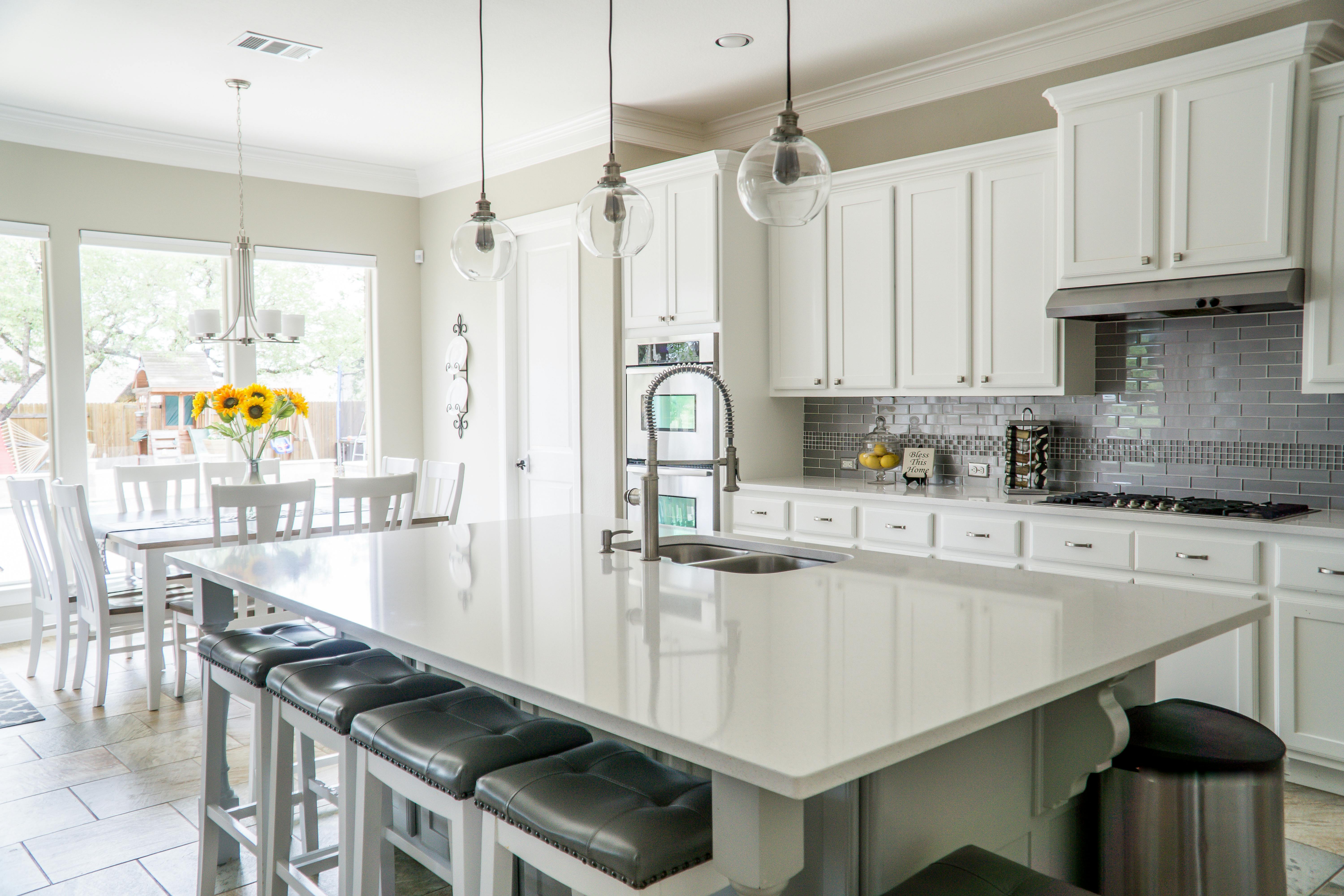
Real‑estate listings gush about “chef‑ready kitchens,” but achieving that photo‑ready gloss doesn’t require gutting your cooking space. It hinges on tackling two high‑impact surfaces: cabinet faces and hardware. Over a single three‑day weekend, you can trade dated oak doors and tarnished pulls for a crisp, contemporary canvas that tricks the eye into thinking the entire room is new.
Remove cabinet doors, label hinges, and degrease every surface with a trisodium phosphate substitute; oven‑residue grime is invisible but sabotages paint adhesion. Sand lightly with 220‑grit paper, then vacuum and tack‑cloth away dust. This laborious stage determines 80 percent of finish quality, so treat it like mise en place for painting.
Use a high‑adhesion bonding primer, rolling with a 4‑inch foam mini‑roller for glass‑smooth results. Once dry, apply enamel‑hard cabinet paint in a satin sheen. Popular modern palettes include deep forest green for lower cabinets paired with crisp white uppers—visual layering that mimics custom millwork. Allow six hours between coats and cure overnight.
Matte‑black bar pulls bridge rustic and industrial trends, while brushed brass warms cooler cabinet tones. Match hinge finishes to pulls for a cohesive statement. Re‑mount doors using your labeled system, adjusting for even reveals. The final flourish? A single‑sheet peel‑and‑stick backsplash behind the cooktop that ties color stories together without messy grout.
Paint, primer, and rollers run about $200. Hardware averages $3 per pull—$120 for forty doors and drawers. Add $60 for a backsplash panel and $20 for sanding supplies, and the grand total hovers near $400. Home‑valuer algorithms routinely credit refreshed kitchens with a 4‑percent bump, translating to thousands in theoretical equity.


%20(1)%20(1).jpg)